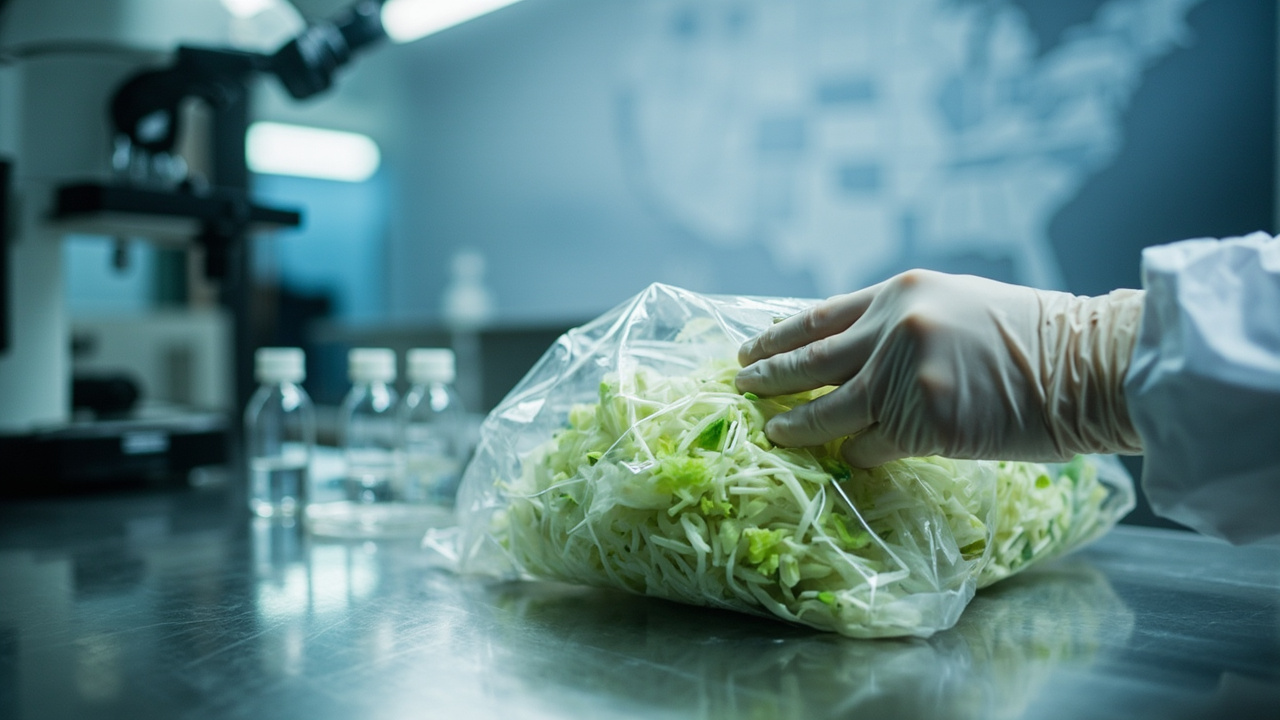
TL;DR: The multistate Cyclospora outbreak traced to iceberg lettuce served at Taco Bell is over: CDC declared it ended on Sept. 11, 2026, with 12,883 confirmed cases, 570 hospitalizations and two deaths across 21 states, and FDA closed its investigation on Oct. 2.
What FDA's final update found
FDA's closing update, dated Oct. 2, 2026, reported that two environmental samples gathered during inspections in Mexico tested positive for Cyclospora. One came from a tank holding outgoing wastewater at the Taylor Farms de Mexico processing facility. The second came from a drainage ditch at an iceberg lettuce grower identified during traceback work. Genotyping of both samples has been completed, and FDA said it is continuing to analyze how the results relate to clinical specimens from people who fell ill.
FDA said there is not enough evidence to conclusively determine how the lettuce became contaminated. The positive samples, the agency said, show that Cyclospora was present in the environment where the lettuce was grown and processed, adding to epidemiological and traceback evidence linking the outbreak to recalled shredded iceberg lettuce from Taylor Farms de Mexico. FDA also said it remains confident that all recalled iceberg lettuce tied to this outbreak is off the market.
A Michigan interim report on the state's early investigation, covered by Food Safety Magazine, found that 2,168 of 3,114 patients interviewed, or 69.6%, reported eating food bought from a single restaurant chain, with lettuce the most commonly consumed ingredient. The report helped inform FDA's traceback and public health response.
How a five-state warning grew into a 21-state outbreak
The federal investigation was announced on July 16, 2026. On July 17, traceback converged on a single supplier, Taylor Farms de Mexico, which voluntarily removed all iceberg lettuce sourced from central Mexico from the U.S. market, according to FDA's post-outbreak summary. The recall included Marketside-brand Iceberg Salad in 12-ounce and 24-ounce packages and Shredded Lettuce in 8-ounce and 16-ounce packages sold at Walmart, with best-if-used-by dates from July 18 to Aug. 3, 2026. Taco Bell has indicated it stopped using the supplier's lettuce as of July 17, 2026.
CDC's initial guidance named Taco Bell locations in five states: Indiana, Kentucky, Michigan, Ohio and West Virginia. The Associated Press reported on July 17 that federal health officials had confirmed lettuce from Mexico served at the chain in those five states as a source of the outbreak. Cases were eventually reported in 21 states: Arkansas, Georgia, Illinois, Indiana, Iowa, Kansas, Kentucky, Maine, Massachusetts, Michigan, Missouri, Nebraska, New Hampshire, North Carolina, Ohio, Oklahoma, Pennsylvania, Tennessee, Texas, Virginia and West Virginia.
Distribution reached further than the five states in the first warning. FDA confirmed shipments of recalled iceberg lettuce from Taylor Fresh Foods between June 29 and July 16, 2026, in states including Alabama, Connecticut, Florida, Massachusetts, New York and Wisconsin.
CDC reported a significant decrease in recent infections linked to the outbreak before declaring it over. Before the recall, the outbreak's peak produced more than 1,000 new infections in one day; by August, the average had dropped below two per day, Food Safety Magazine reported. CDC said that "At this time, there is no risk of people getting sick with cyclosporiasis from this source."
What the 2026 season looked like nationwide
The lettuce outbreak was one part of the 2026 season. From May 1 to Aug. 31, 2026, CDC received reports of 19,595 laboratory-confirmed cases acquired in the United States, with 1,043 hospitalizations and two deaths, according to Food Safety Magazine. The same period in 2025 produced 1,180 cases. The 2026 total includes the lettuce outbreak, other clusters and cases with no identified outbreak link.
FDA is investigating four additional cyclosporiasis outbreaks, with 231, 38, 22 and 18 cases respectively, and no vehicle of illness has been identified in any of them. Cyclosporiasis is caused by the microscopic parasite Cyclospora cayetanensis and is a nationally notifiable disease, reportable in 47 states, the District of Columbia and New York City, CDC says.
FDA's plans before the 2027 growing season
In the Oct. 2 announcement, FDA listed actions it intends to take before the 2027 growing and harvesting season. They include publishing an Outbreak Investigation Report that will summarize the investigation, review possible factors behind the contamination and offer prevention recommendations, and increasing surveillance of commodities historically associated with Cyclospora.
The agency also plans more outreach on the Produce Safety Rule, the Preventive Controls for Human Food Rule and the Food Traceability Rule; enhanced laboratory capacity in Mexico to process samples in country; and expert panels on worker health and hygiene and on water and wastewater monitoring. FDA said it will work with CDC to align genotyping methods and with Mexico's Ministry of Agriculture, COFEPRIS and SENASICA on training and food safety education.
FDA also reported that it sent a letter to industry calling for supply-chain collaboration on Cyclospora contamination, and that senior FDA and Mexican public health and agriculture officials met during the week of Sept. 8, 2026. It also plans to monitor environmental factors, such as weather, that may contribute to spread.
What diners should know now
The recalled lettuce is past its best-if-used-by dates, and FDA says it should no longer be available in stores or restaurants. People who handled it earlier should clean and sanitize any surfaces or containers it touched.
Cyclospora infection usually causes diarrhea with frequent bowel movements. Other common symptoms include loss of appetite, weight loss, stomach cramps or pain, bloating, increased gas, nausea and fatigue; vomiting, body aches, headache and fever may occur, and some infected people have no symptoms. Untreated illness can lead to dehydration and severe complications lasting from a few days to a month or longer, and symptoms can ease and then return. FDA advises people with symptoms to contact a health care provider, especially if they ate shredded iceberg lettuce in the two weeks before getting sick.